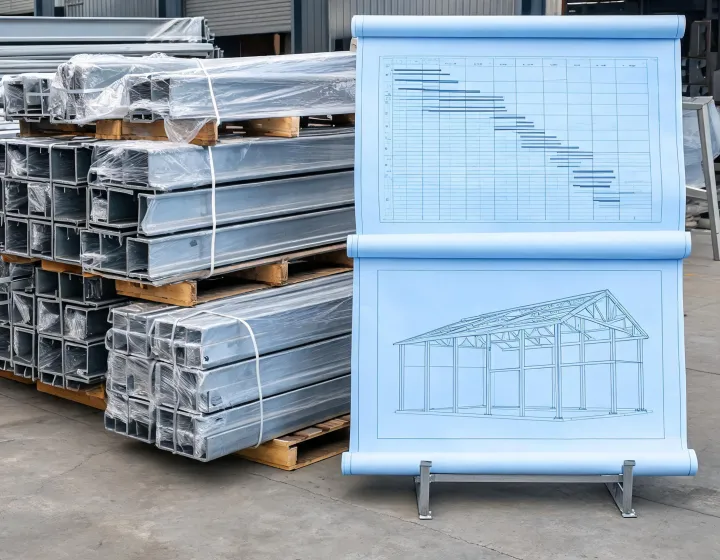
01Requirement capture
We record building use, footprint, clear span, eave height, crane needs, envelope specification, installation country and target port. Site loads and code basis must come from the buyer's qualified project team. Unknown inputs are marked as open rather than silently assumed by a supplier.
02Design basis review
Shortlisted suppliers state the wind, snow, seismic and serviceability basis used in their preliminary offer. The buyer's local engineer checks whether those assumptions suit the jurisdiction. Foundation and erection responsibilities are clarified in the commercial scope.
03Offer alignment
We compare primary steel, purlins, bracing, fasteners, cladding, coatings and documentation side by side. Exceptions remain visible until the buyer accepts or resolves them. A welded subassembly may reduce some site fitting but consume more shipping volume; a bolted knock-down system can pack compactly yet increases connection and torque-control work at installation. Ask suppliers to state member grade, bolt specification and coating repair method for the quoted arrangement. Compare galvanized and painted finishes against the same exposure and maintenance plan. Ask for the coating mass or dry film thickness, where applicable, and check how the supplier proposes to repair cut edges, welds and transport damage.